

.png)
Key Takeaways / Summary:
-
Request a loan term adjustment or payment modification directly from your lender.
-
Apply a lump-sum payment toward your principal loan balance to lower future obligations.
-
Cancel unnecessary vehicle add-ons and shop around for lower auto insurance rates.
Rising monthly expenses and tight budgets can make managing your finances difficult, especially since car payments represent one of the highest fixed costs you face. Many people assume that refinancing is the only option available when an auto loan becomes a burden.
Commonwealth Credit Union has years of experience helping members manage auto loans and balance their budgets, and we know there are other paths forward.
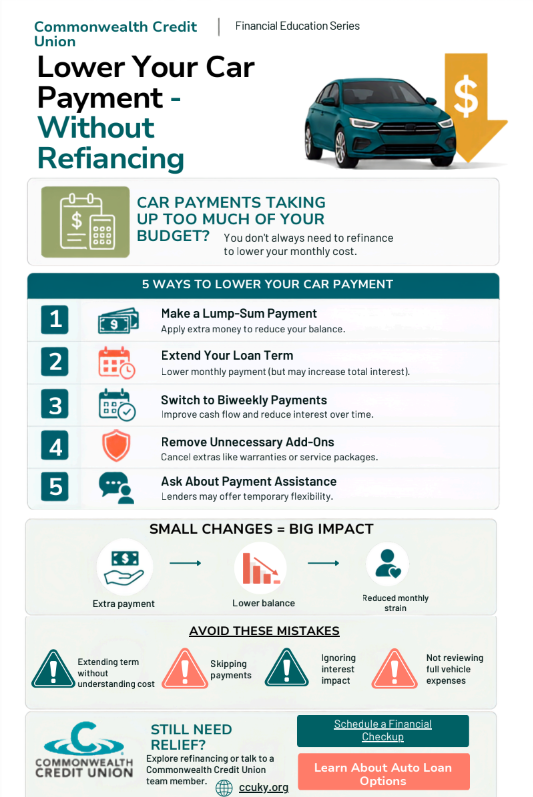
5 Ways to Lower Your Car Payment
Your monthly cost depends on factors like your loan balance, interest rate, loan term, and insurance fees. While you might not change the foundational loan contract immediately, you can influence how and when you pay. Small adjustments can create meaningful monthly relief.
-
Extend Your Loan Term: Some lenders allow term adjustments without going through a full refinance. This step provides a lower monthly payment, but it will result in paying more interest over the life of the loan.
-
Make a Lump-Sum Payment: If you receive a tax refund or a work bonus, apply that extra money directly toward your principal loan balance. This action can reduce your future monthly burden or shorten your overall loan term.
-
3. Adjust Your Payment Schedule: Switching to biweekly payments helps reduce the total interest you pay and improves your cash flow timing by matching your paychecks.
-
4. Review Add-Ons & Insurance: Take a close look at your initial contract to cancel unnecessary warranties or add-ons. You can also shop around for better auto insurance rates to lower your total monthly vehicle costs.
-
5. Request Payment Assistance or Modification: Lenders often offer temporary relief or restructuring options, which are especially helpful during times of unexpected financial hardship.
When Refinancing Might Still Make Sense
Refinancing remains a valuable next step if your current interest rate is exceptionally high, if your credit score has improved significantly, or if your payment remains completely unaffordable after trying other methods.
Start by comparing the current interest rates against current market averages to identify potential savings. It is also wise to pull a copy of your credit report to see if your score has improved enough to qualify for better loan terms and a lower monthly obligation.
Smart Tips to Stay on Track
Always make your minimum payments on time to protect your financial health. Avoid rolling late payments forward, and do not extend your loan term without fully understanding the total cost over time.
Next Steps for Car Payment Relief
If your car payment is still too high, it may be time to explore additional options. Refinancing can lower your monthly payments, but your specific savings depend entirely on your credit, rates, and loan terms. Commonwealth.
We want to support your entire financial journey. Please apply online to check your options, or contact us to speak with a local team member today.
Image credit: // Shutterstock // Kwangmoozaa